Skin & Renewal
Skin & Renewal: firmer, fresher skin over time
How skin changes with time and in menopause, what research says about copper peptides (GHK-Cu), Matrixyl and collagen, and a simple routine that works.
Skin is often where you notice midlife first: fine lines that stay after you stop smiling, a softer jawline, a dullness that concealer can't fix. Skin is also where peptides are easiest to try. There's no prescription, no needles, and the research is modest but real.
What changes in your skin over time
- Collagen production drops by about 1% a year from your mid-twenties. Then it falls sharply: skin can lose around 30% of its collagen in the first five years after menopause.
- Cell turnover slows, so dead cells hang around longer and skin looks less luminous.
- The skin barrier weakens, so skin gets drier and more reactive.
- Sun damage from years ago starts to show as spots and texture.
The aim isn't to look 25. It's skin that's comfortable, firm and fresh at the age you are.
Topical peptides: what the research says
Peptides in skincare work as messengers. They tell skin cells to make more collagen or calm irritation. Here are the best-known ones:
- Copper peptide (GHK-Cu). A small peptide that occurs naturally in the body. It binds copper and is linked to skin repair. Small studies of copper-peptide creams have shown improvements in firmness, fine lines and density over about 12 weeks. It's gentle for most people, but avoid using it in the same step as strong acids or vitamin C.
- Palmitoyl pentapeptide-4 (Matrixyl). A "signal" peptide shown in small trials to reduce the look of wrinkles over a few months.
- Acetyl hexapeptide-8 (Argireline). Marketed as a "topical Botox." Effects are mild, but some women like it for expression lines.
Honest expectations: peptides are gentle and steady, not dramatic. They work best as part of a routine, not as a miracle jar.
Collagen peptides by mouth
Hydrolyzed collagen peptides are proteins broken into small pieces. Several randomized trials and reviews have found modest improvements in skin hydration and elasticity after 8–12 weeks of daily use, often 2.5–10 g a day. Many of those trials are funded by collagen makers, and the most rigorous ones show smaller effects, so treat it as a nice extra, not a fix. They don't replace a good diet, but they're an easy, low-risk addition, especially if your protein intake is low.
Weight loss and your face
Fast weight loss, including on GLP-1 medicines, can leave the face looking hollower and skin looking looser. Losing more slowly, eating enough protein and strength training help protect it. See Weight & Shape.
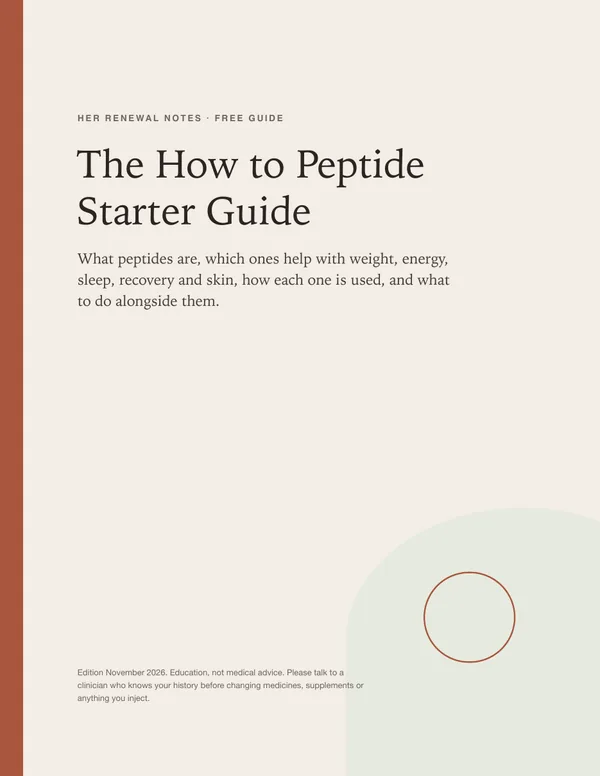
Free printable guide
The How to Peptide Starter Guide
Which peptides help with weight, energy, sleep, recovery and skin, how each one is used, and what to do alongside them so they work.
A simple routine that works
Morning:
- A gentle cleanser, or just water.
- A peptide or vitamin C serum.
- Moisturizer.
- Broad-spectrum SPF 30 or higher, every day, even in winter. This is the single most powerful anti-aging step.
Evening:
- Cleanse.
- A retinoid, starting two or three nights a week. On the other nights, use your peptide serum.
- A richer moisturizer.
What to expect: better hydration in 2–4 weeks, more even texture around 8 weeks, and firmness and fine lines from about 12 weeks. Take photos in the same light every four weeks, because you won't see it day to day.
Injectable "skin" peptides
You may see injectable GHK-Cu or other peptides promoted for skin. Injecting changes the risk completely, and the human evidence for injected forms is far thinner than for creams. If you're considering it, read the "How to Peptide" guide first.
What tends to work, and what tends not to
Works: daily SPF; a retinoid you can tolerate; a peptide serum used consistently; enough protein; collagen peptides if you like them; patience measured in months.
Doesn't: ten actives at once; switching products every two weeks; harsh scrubs; expecting a serum to do the job of sunscreen.
Frequently asked questions
Do copper peptides really work?
Small studies of copper-peptide creams show improvements in firmness and fine lines over about 12 weeks. The effect is gentle and steady rather than dramatic.
Can I use peptides with retinol?
Yes. Many women use a retinoid at night and a peptide serum in the morning, or alternate nights, which also helps with sensitivity.
Do collagen supplements work for skin?
Several trials found modest improvements in skin hydration and elasticity after 8–12 weeks of daily hydrolyzed collagen peptides. Many were industry-funded, and independent trials show smaller effects.