Daily Energy
Daily Energy: steady days and better nights
Why so many women feel tired all the time, the causes worth testing for, how to sleep better in perimenopause, and the truth about energy peptides.
There's normal tired, the kind a good night fixes, and there's the tiredness so many women describe: waking up already drained, needing coffee to feel human, hitting a wall mid-afternoon, then lying awake at 3 a.m. If that sounds familiar, you're far from alone, and it's usually fixable once you know where it's coming from.
The usual suspects
Before reaching for anything new, rule out the common causes, several of which are simple to test and treat:
- Low iron. Heavy periods, which are common in perimenopause, drain iron stores. Low ferritin can cause fatigue, breathlessness on stairs and hair shedding, even before you're technically anemic.
- Thyroid. An underactive thyroid causes tiredness, weight gain and feeling cold.
- Vitamin D and B12. Both are commonly low and easy to check.
- Blood sugar swings. Big spikes and dips after meals feel like crashes. See Metabolism.
- Broken sleep. Night sweats, waking at 3 a.m. and snoring that comes on in midlife (sleep apnea becomes more common after menopause) all wreck sleep.
- Mood. Low mood and anxiety rise in perimenopause, and both can show up mostly as exhaustion.
If tiredness is new, severe, or comes with weight loss, fever or breathlessness, see a doctor promptly.
Sleep: the foundation
Progesterone has a calming, sleep-supporting effect, and it often drops first in perimenopause. That's one reason sleep gets lighter. What helps:
- Keep the same wake time every day, weekends included. It anchors everything else.
- Get daylight in the morning within an hour of waking, even on a cloudy day.
- Stop caffeine by noon. Its half-life is around five hours, so an afternoon latte is still in your system at bedtime.
- Keep the bedroom cool and have layers you can throw off for night sweats.
- Go easy on alcohol. It helps you fall asleep, then fragments the second half of the night.
- Talk to a doctor about hot flashes and sleep. Hormone therapy and other treatments can help a great deal.
Food for steadier energy
Most afternoon crashes come down to breakfast and lunch. Build each meal around protein, add fiber, and treat fast carbs as a side, not the main event. Don't skip lunch to "save calories": it usually means a 4 p.m. crash and an evening of grazing.
Free printable guide
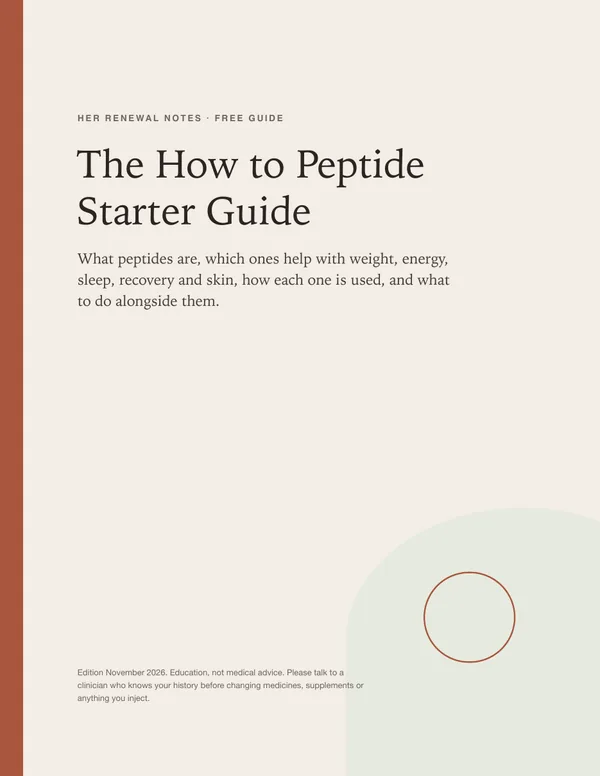
The How to Peptide Starter Guide
Which peptides help with weight, energy, sleep, recovery and skin, how each one is used, and what to do alongside them so they work.
The honest truth about energy peptides
This is the category where marketing runs furthest ahead of evidence. You'll see peptides sold for energy, focus and "mitochondrial support," and NAD+ in the same breath, even though NAD+ isn't a peptide at all. Most of these claims rest on lab or animal studies, with very little research in women like you.
That doesn't mean they're useless. It means nobody honestly knows yet. If you've fixed the basics and still want to explore, read the "How to Peptide" guide first and involve a clinician. And note that some women on GLP-1 medicines feel more tired, especially if they're eating too little. More protein and regular meals usually help.
What tends to work, and what tends not to
Works: a blood test before a supplement; a fixed wake time; morning light; caffeine before noon; protein at breakfast; treating night sweats; a short walk after lunch.
Doesn't: more coffee; sleeping in on weekends to "catch up"; skipping meals; stacking energy products without knowing why you're tired.
Frequently asked questions
Why am I always tired in my forties?
Common causes include low iron (often from heavy periods), thyroid problems, low vitamin D or B12, blood sugar swings and poor sleep from perimenopause. Most can be tested for.
Why do I wake up at 3 a.m. in perimenopause?
Falling progesterone, night sweats, blood sugar dips and alcohol can all fragment sleep in the second half of the night.
Do peptides help with energy?
Evidence for "energy" peptides is mostly from lab and animal studies. Fixing iron, thyroid, sleep and blood sugar usually makes a bigger, more reliable difference.