Metabolism
Metabolism: what really changes in midlife
How perimenopause affects insulin resistance, cortisol, thyroid and metabolic rate, which blood tests to ask for, and where GLP-1s and other peptides fit.

"My metabolism just stopped" is one of the most common things women say in their forties. The reality is more specific than that, and better news: your metabolism didn't break. A few systems changed how they talk to each other, and you can measure and work with each of them.
Is metabolism really "slowing down"?
Large studies of energy use suggest your base metabolic rate is fairly stable from your twenties to around sixty, once you account for body size and muscle. What changes in midlife is usually not the engine itself but:
- How much muscle you carry, which is the tissue that burns energy around the clock.
- How you handle sugar, meaning how well insulin works.
- Hormone signals: estrogen, progesterone, cortisol and thyroid hormones.
- Sleep and daily movement, which quietly drop as life gets busier.
Insulin: the quiet shift
Insulin moves sugar out of your blood and into your cells. As estrogen falls, many women become a little insulin resistant: the same breakfast leads to a higher, longer blood sugar rise, then a dip that brings cravings and a foggy head.
Signs to notice: energy crashes after meals, cravings in the late afternoon, fat gathering at the waist, and fasting glucose or HbA1c creeping up on tests.
What helps: protein and fiber first in a meal, a 10-minute walk after eating, strength training (muscle is your biggest sugar sink), and enough sleep. For some women, a clinician will suggest metformin or a GLP-1 medicine. GLP-1s improve blood sugar control as well as appetite.
Cortisol: stress you can see in your waistline
Cortisol is your main stress hormone. It's useful in short bursts and unhelpful when it stays high: poor sleep, constant deadlines, under-eating and very hard daily workouts can all keep it raised. Chronically high cortisol tends to push fat toward the belly and makes sleep lighter, which then makes blood sugar harder to control. It's a loop.
You can't supplement your way out of a stressful life, but you can lower the load: regular meals (no all-day fasting followed by a big dinner), morning daylight, a wind-down routine, and swapping one hard workout a week for a walk or yoga.
Hormones: perimenopause in one paragraph
Perimenopause usually starts in your forties and can last several years before your last period. Estrogen doesn't just fall. It swings, sometimes higher than before, then lower. Progesterone usually drops first. That's why symptoms come and go: sleep, mood, hot flashes, heavier periods, and changes in how your body stores fat. Menopausal hormone therapy is an evidence-based option for many women, and it's worth a real conversation with a doctor who takes midlife seriously.
Thyroid: rule it out
An underactive thyroid causes tiredness, weight gain, feeling cold and dry skin, which overlap a lot with perimenopause. It's common in women and easy to test, so check it before assuming hormones explain everything.
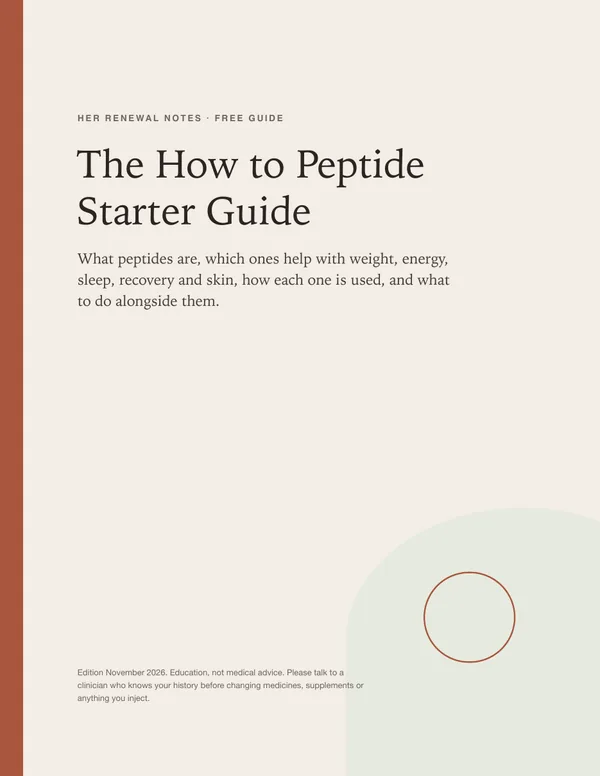
Free printable guide
The How to Peptide Starter Guide
Which peptides help with weight, energy, sleep, recovery and skin, how each one is used, and what to do alongside them so they work.
The blood tests worth asking about
Bring this list to your next appointment. Your doctor may add or skip some, and that's fine:
- Fasting glucose and HbA1c, for blood sugar now and over the last few months.
- Fasting insulin, which can show resistance before glucose rises.
- Lipid panel, because cholesterol often rises around menopause.
- TSH, with free T4 if needed, for thyroid.
- Ferritin and a full blood count, for iron stores, especially if your periods are heavy.
- Vitamin D.
- Liver enzymes, since fatty liver often travels with insulin resistance.
Where peptides fit
For metabolism, the peptides with real human evidence are the GLP-1 family (semaglutide, tirzepatide), and they're prescription medicines. Peptides like MOTS-c are interesting in research but are mostly studied in animals so far. If you're curious, read the "How to Peptide" guide first. It explains what to check and what to ask.
What tends to work, and what tends not to
Works: testing before guessing; protein and fiber at breakfast; walking after meals; strength training; protecting sleep; an honest conversation about hormone therapy.
Doesn't: extreme fasting on a stressed body; cutting carbs to zero and then bingeing; "metabolism boosting" supplements; blaming yourself.
Frequently asked questions
Does perimenopause cause insulin resistance?
Falling and fluctuating estrogen is linked to lower insulin sensitivity, so many women see blood sugar and waist size change in their forties even without changing their diet.
What blood tests should I ask for in perimenopause?
Commonly: fasting glucose, HbA1c, fasting insulin, a lipid panel, TSH, ferritin, vitamin D and liver enzymes. Your doctor will tailor the list.
Can peptides fix a slow metabolism?
Prescription GLP-1 medicines improve blood sugar and appetite. Other "metabolic" peptides are mostly early research. Muscle, sleep and blood sugar habits still do most of the work.